
Marion County Arrest Records and Charges
Marion County arrest records usually start with a police agency, the Sheriff's Office, or jail custody record. They can identify that a person was arrested or booked, but they do not decide whether the person is guilty. The formal charge record starts later, when the Marion County Prosecuting Attorney files a complaint, information, or other charging document with the court. The county's criminal-prosecution page says reports may come from city police departments, the Sheriff's Office, or Missouri State Highway Patrol, then a prosecutor reviews the report and decides whether to file, decline, or request more investigation.
The court charge record is narrower than the full criminal file. It shows the offense filed, charge level, filing date, warrant or summons activity, status, and later changes to that charge. The complete case record, including pleas, hearings, verdict, disposition, and sentencing, belongs in Marion County criminal court records. Custody status and the current jail list are separate from court charges, so a person checking booking custody should use the sheriff roster and then cross-reference Case.net for court events.
The local arrest-to-charge path is documented by the county's criminal prosecution process, which explains under-advisement review, misdemeanor summonses, felony warrants, and clerk case-number assignment. The Sheriff's services page adds the documented VINE and notification context for custody-related follow-up.

The sheriff services source is useful for custody notification context, but it does not replace the court charge record.
Find Marion County Arrest Records
There is no single Marion County page that combines every arrest, booking, prosecutor review, and filed charge into one official public record. The practical search path is layered. Use Missouri Case.net for filed court charges, the Sheriff's current-inmate channel for present county custody, Missouri DOC for active prison, probation, or parole supervision, and MSHP for statewide criminal-history checks. If the question is an incident report or arrest report rather than a court case, contact the arresting law enforcement agency.
- Search Case.net by defendant name or case number, then filter to Marion County or the 10th Judicial Circuit where available.
- Open the case and review each charge, filing date, warrant or summons event, and current status.
- For jail custody, check the Sheriff's current inmate list or call the jail instead of assuming Case.net shows booking status.
- For a statewide background-history product, use MSHP's criminal-record channel rather than the local docket.
- For an arrest report or police incident record, use the Sheriff, Hannibal Police, Palmyra Police, or the agency that made the arrest.
The Marion County Sheriff app is documented in the official Google Play listing as a way to report crimes, submit tips, use interactive features, and receive public safety news. The research did not confirm an app-only warrant, inmate, or charge lookup. Treat it as a tip and public-safety information channel, not as a substitute for Case.net or the clerk.
The Marion County Sheriff app listing is one of the documented access notes for this record area.
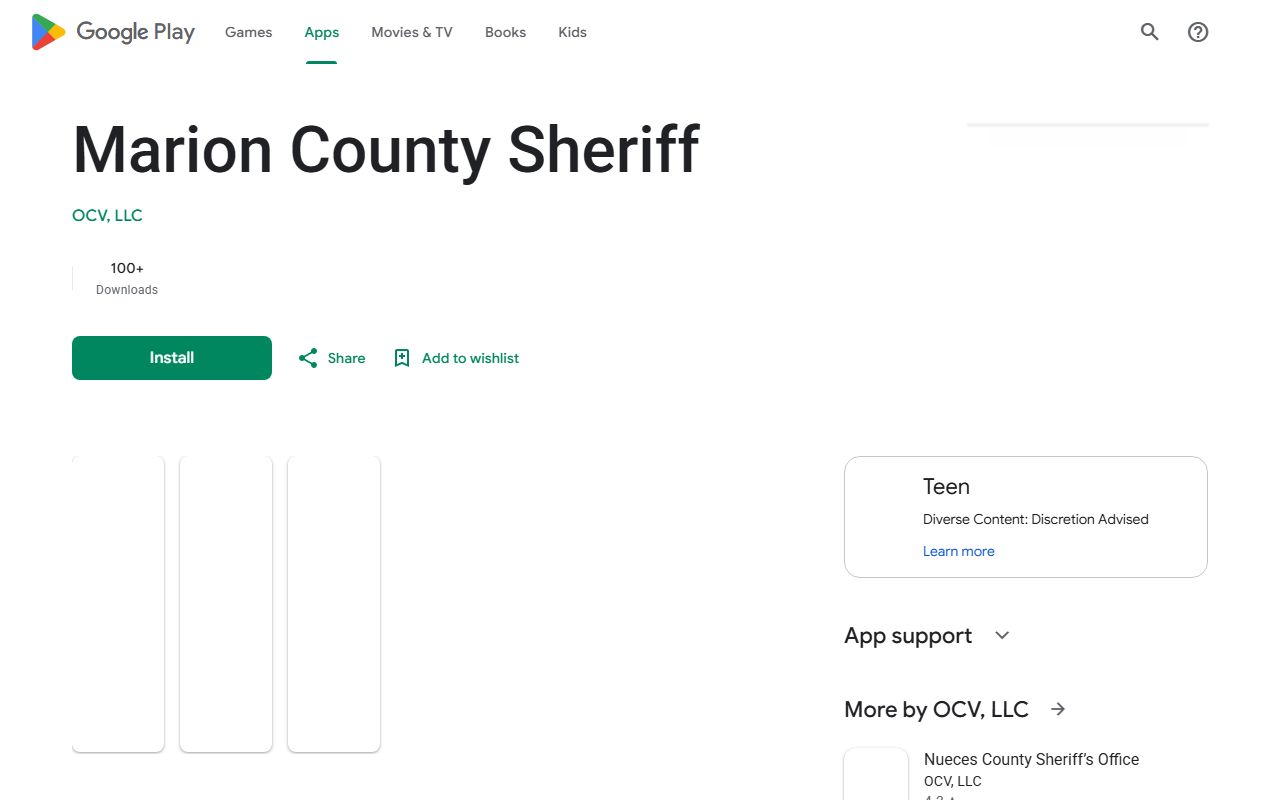
The app image helps clarify what the app is confirmed to do, and just as important, what it is not confirmed to do.
Marion County Charges After Arrest
After an arrest, the prosecutor's filing decision controls whether a court charge appears. Marion County's official description says reports are entered in a case management system and usually assigned to a prosecutor. The prosecutor aims to review reports the same day received, but a report may be sent back for more investigation. A felony filing normally leads to an arrest warrant. A misdemeanor filing generally leads to a mailed summons. Once the case is filed, Circuit Clerk District 1 or District 2 assigns the case number.
| Document | Who Uses It | What It Means in Marion County Court Records |
|---|---|---|
| Complaint | Prosecutor or charging authority | Starts or supports a criminal accusation filed in court. |
| Information | Prosecutor | A prosecutor-filed charging document common in Missouri criminal practice. |
| Indictment | Grand jury process | A formal charge route that can appear in serious criminal matters when used. |
A charge may not match the arrest allegation word for word. Prosecutors can file fewer charges, add charges, reduce severity, amend an offense, dismiss a count, or decline the matter. That is why court charge records should be checked separately from booking details.
Marion County Charge Status
Charge status is the part of the record that shows what happened to each formal offense. One case can have several counts. Each count may take a different path, so read the charge table and docket entries together. A dismissed count does not always mean the whole case ended. A guilty plea to one count may appear beside dismissed or amended counts in the same court record.
| Status | What It Means |
|---|---|
| Pending | The charge has been filed and no final disposition has been entered. |
| Amended | The prosecutor or court record changed the charge text, level, or count details. |
| Reduced | The charge moved to a lower severity or different offense as the case progressed. |
| Dismissed | The charge was ended by court action, plea agreement, or prosecutorial decision. |
| Nolle prosequi | A prosecutor declined to proceed on a charge. Use the docket text for exact wording. |
The Missouri DOC offender search is a different channel. It searches active supervised offenders, including probationers and parolees, but it excludes discharged offenders and certain confidential records. It should not be read as a complete list of Marion County arrests or filed court charges.
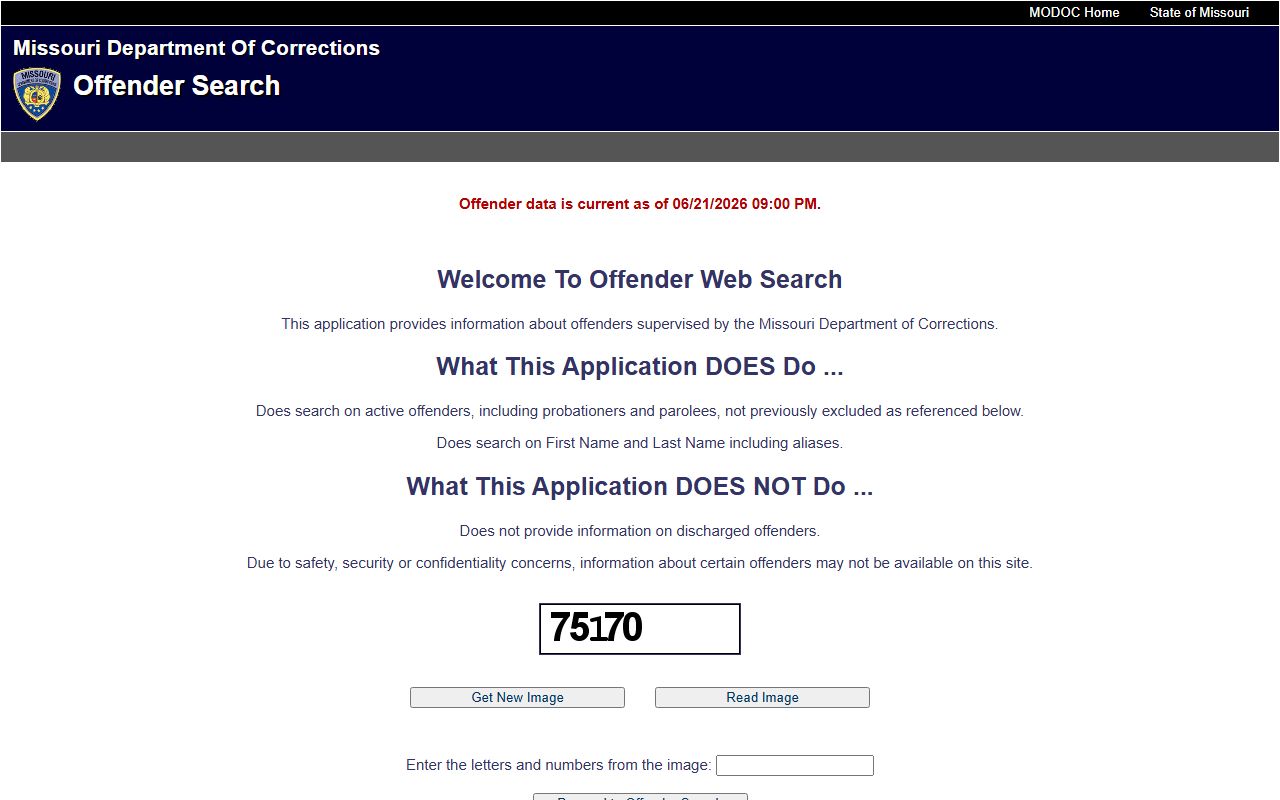
The DOC image supports the access-channel distinction between court charges and post-sentence supervision records.
Marion County Charges vs Convictions
Being charged is not the same as being convicted. A charge is the formal accusation filed after prosecutor review. A conviction is the result of a guilty plea or finding of guilt. Marion County court charge records may show charges that are pending, amended, reduced, dropped, or dismissed, so the disposition field is essential.
| Point | Charge | Conviction |
|---|---|---|
| Record role | Shows what the prosecutor filed. | Shows a final guilty outcome. |
| Timing | Appears early in the court case. | Appears after plea, verdict, or judgment. |
| Risk when reading | May overstate the final outcome if read alone. | Still needs sentence, appeal, and expungement review. |
Some charge categories also lead readers to specialty state systems. The Missouri Sex Offender Registry provides statewide search and map tools, absconder information, email notifications, and instructions for registry data questions. It is not a Marion County arrest list.
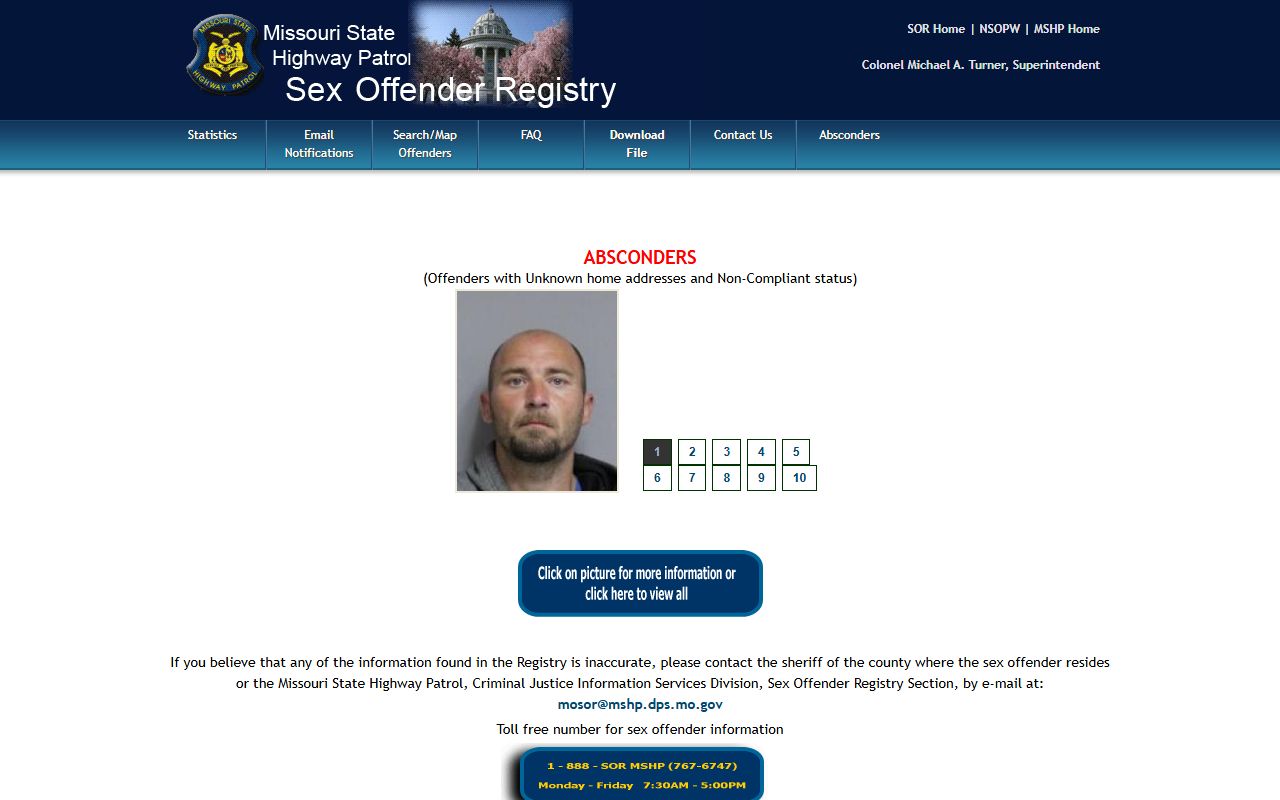
The registry source belongs here only as a documented statewide record channel that may be relevant after qualifying convictions.
Marion County Arrest Record Contacts
The access channel depends on the record. Filed charges go through Case.net and the Circuit Clerk. Prosecutor filing questions go through the Prosecuting Attorney. Arrest reports, incident reports, and sheriff service records go through the Sheriff or the police agency involved. Hannibal Police and Palmyra Police may hold police records for their cities. The court record may still be in Circuit Court or municipal court depending on the offense.
Prosecuting Attorney
906 Broadway
Hannibal, MO 63401
(573) 221-0146
Monday-Friday, 8:00 a.m.-12:00 p.m. and 1:00 p.m.-5:00 p.m.
Sheriff's Office and Jail
1703 Marion City Road
Palmyra, MO 63461
(573) 769-2077 or (573) 221-0678
Hannibal Police publishes its official contact page at hannibalpd.com. The image below reflects the documented Hannibal police source used for city-level arrest or incident channels.
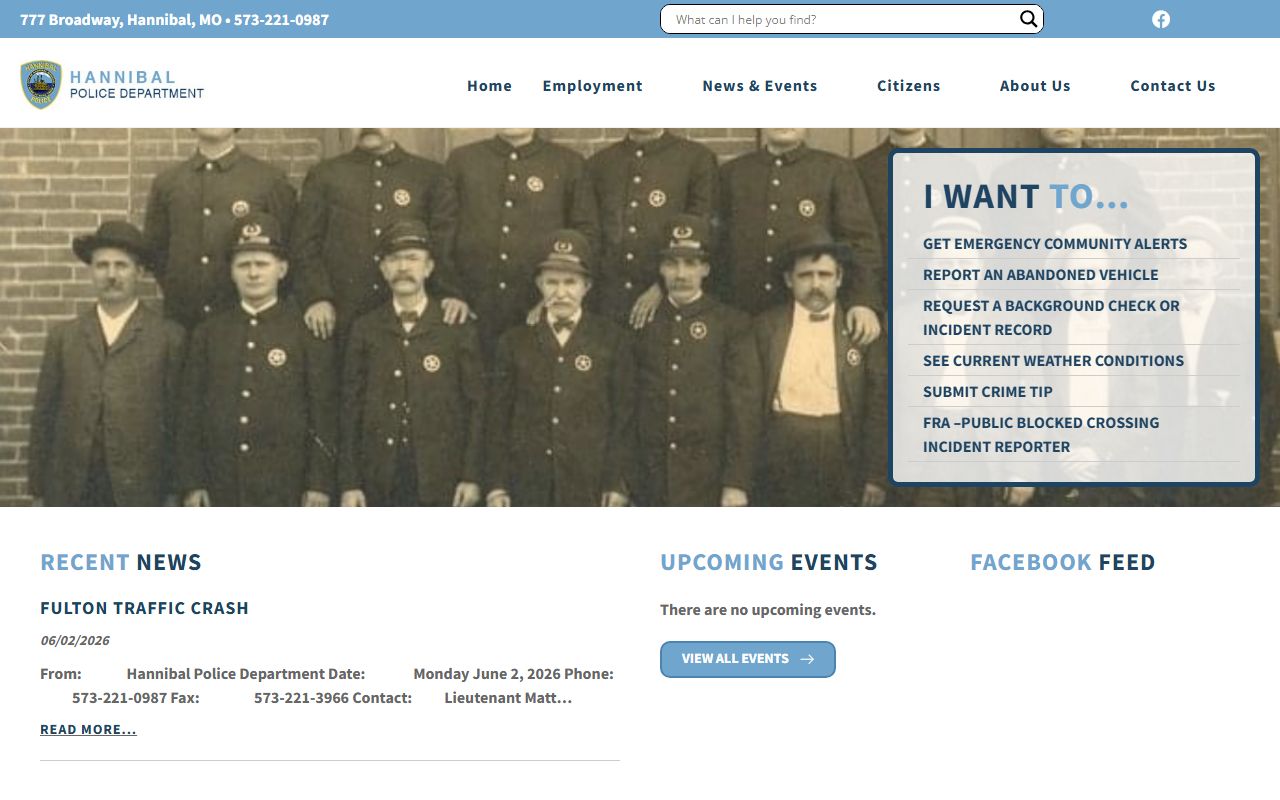
City police records should be kept separate from the court charges filed after the arrest.
Restricted Marion County Arrest Records
Missouri access law starts from openness, but criminal and charge records can still have limits. RSMo 610.011 states the broad open-record policy, while RSMo 610.021 allows some records to be closed. Juvenile files, sealed matters, expunged records, confidential addresses, Social Security numbers, financial account data, and medical or mental health details may be restricted or redacted.
| Record Type | Public Access Concern |
|---|---|
| Juvenile charge material | Missouri juvenile statutes limit access to confidential file content. |
| Sealed case | The court may remove the case or document from general public inspection. |
| Expunged charge | RSMo 610.140 can remove eligible criminal matters from ordinary public access. |
| Investigative arrest report | Law enforcement records may have separate limits before or during prosecution. |
Note: A public charge entry should be read as an accusation unless the court record also shows a conviction.